
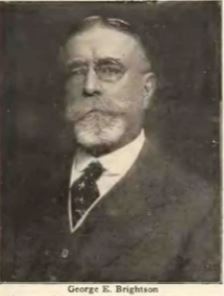
George E. Brightson re-incorporated the Sonora Chime Company in 1913 on Ceder Street in New York City. He then changed the name to Sonora Phonograph Company and re-located to Reed Street, New York City. His leadership brought Sonora to the for front of phonograph companies in the US. 2 of the company’s artwork logos are shown in figs. 1, and 2. In 1919, a lavish dinner was held in his honor in Saginaw, Michigan, the site of a large Sonora manufacturing plant. Shortly after this dinner he became the CEO of Sonora. In 1924 Sonora entered into the radio business and made their first radio they called the model 242 which was a radio-phonograph combination.
Click on pictures below to enlarge.
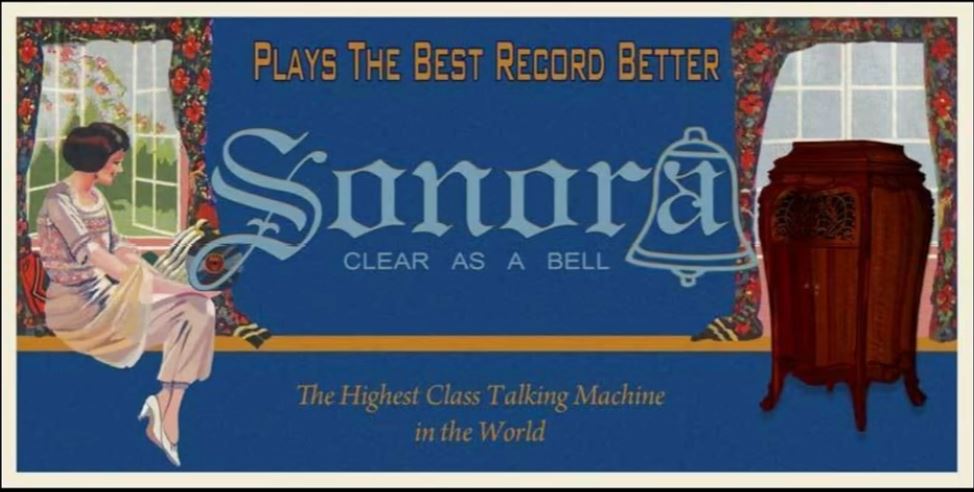
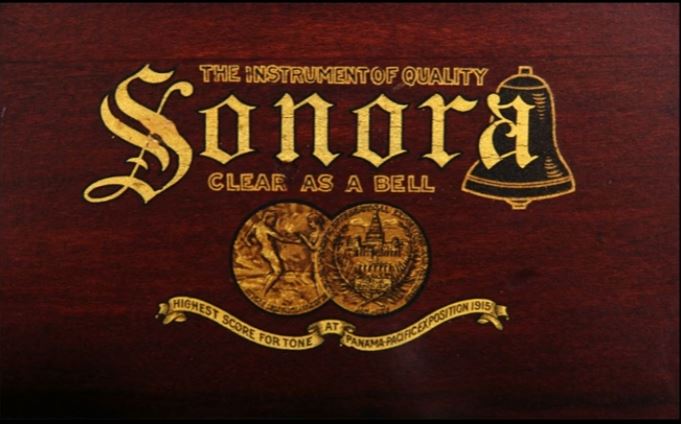
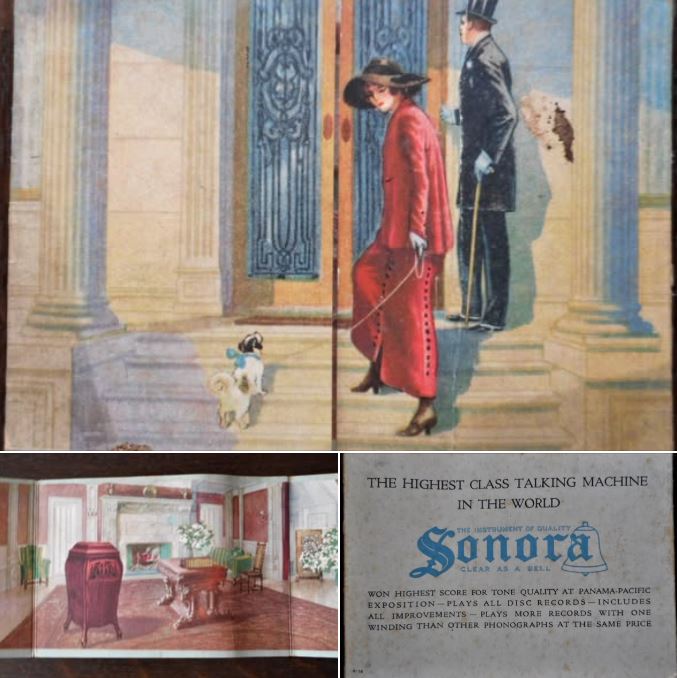
Fig’s 1,2 &3 above are early versions of Sonora advertisements, all nicely done with top quality artists.
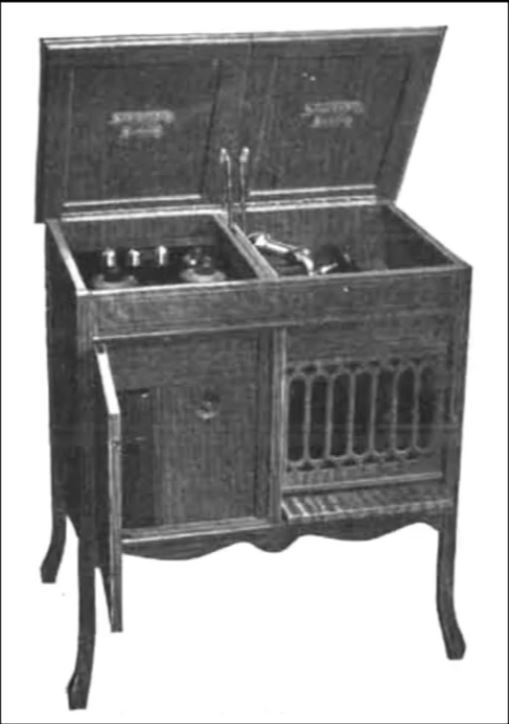
Fig. 4 is the first number 242 radio-phonograph combinations Sonora made in some part of 1924 mentioned above.
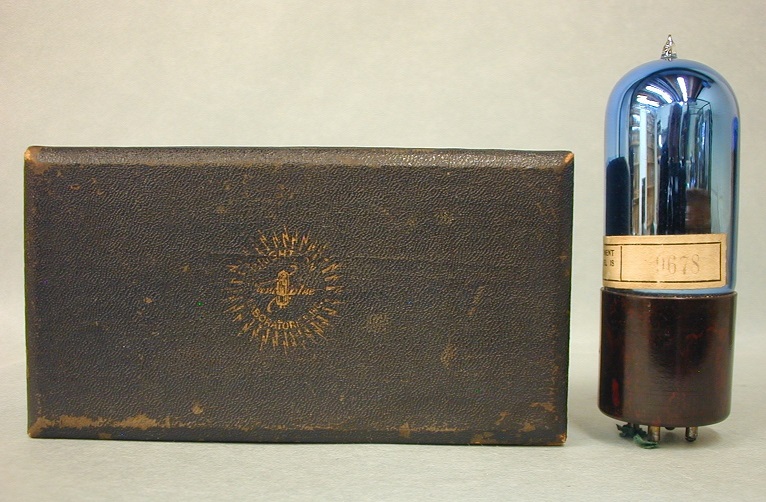
During this time, Brightson, along with other engineer’s, designed a new radio tube and applied for a patent on January 8th, 1925. Around this same time, Brightson resigned as president of the Sonora Company and started a new company and became CEO of Brightson Laboratories Inc. with their location on Winthrop Street in Newark, New Jersey. With all in place now, he introduced his new premium “True Blue” 201-A equivalent vacuum tube featuring a blue glass bulb and red mottled Bakelite base, to resemble marble, and placed in a presentation silk- lined shipping box. The blue glass bulbs, in Brightson’s eyes, were to gain better reception and to prevent microphonics. These statements are doubtful. They also claimed that the material used to solder the component wires to the base pins was silver. This cannot be confirmed by just a look. What can be confirmed is that Brightson offered a sixty- day return policy as this is clearly stated in their ad’s. Brightson also offered the UV-199 dry cell versions of their True Blue tubes. At this time, Brightson Laboratories Inc. listed their business address as the Waldorf-Astoria Hotel, 16 West 34th St., New York City. In a short time, however, they had representatives in Jersey City, New Jersey owned by Triad, in Milwaukee owned by Yah & Lange, Boston owned by Wm. C. Oakes, in Detroit owned by H.C. Schultz and as far away as Australia. Brightson initially set the price of their tubes at $6.00, more than $4.00 more than the going rate for 01-A’s and 199’s. Very few buyers were willing to pay for the True Blue self described quality.
Most of the Brightson’s tubes I have seen have a hand- blown glass bulb with a tip but at some point a machine blown bulb with no tip was also made. Each tube had a paper label with a number on it regardless of the sequential number of tubes in the box. Sales were poor so in a short time they cut the price to $3.50, still a bit high to compete. The number of tubes that could be purchased ranged from one to eight tubes. This author has never seen an 8- tube set.
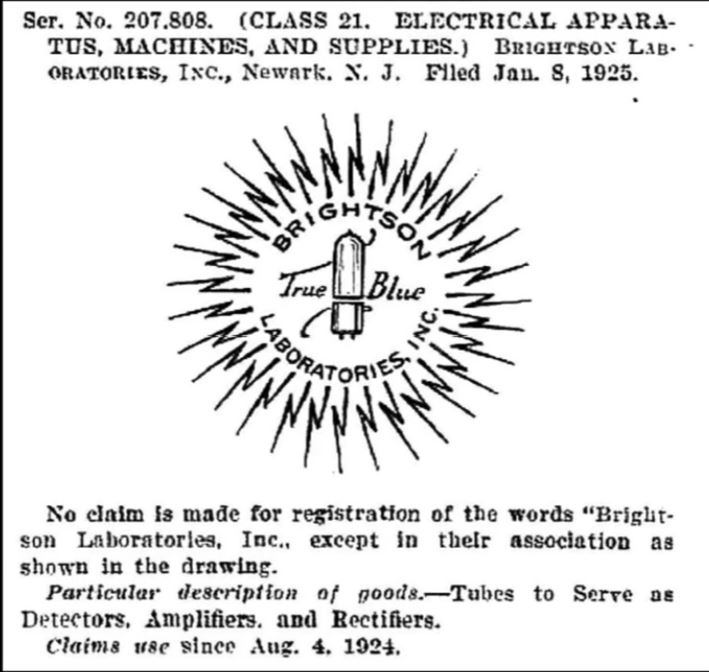
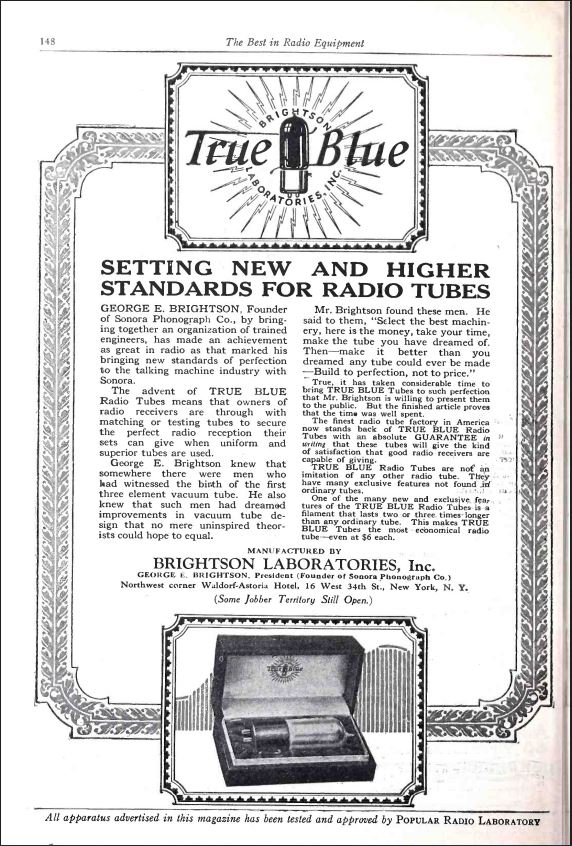
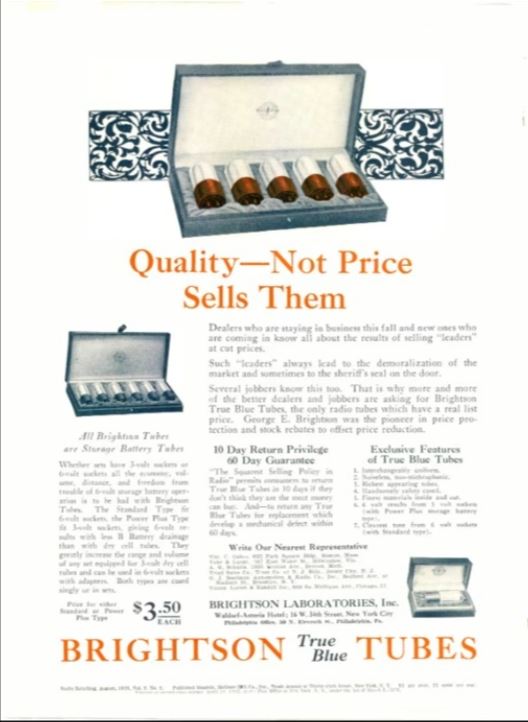
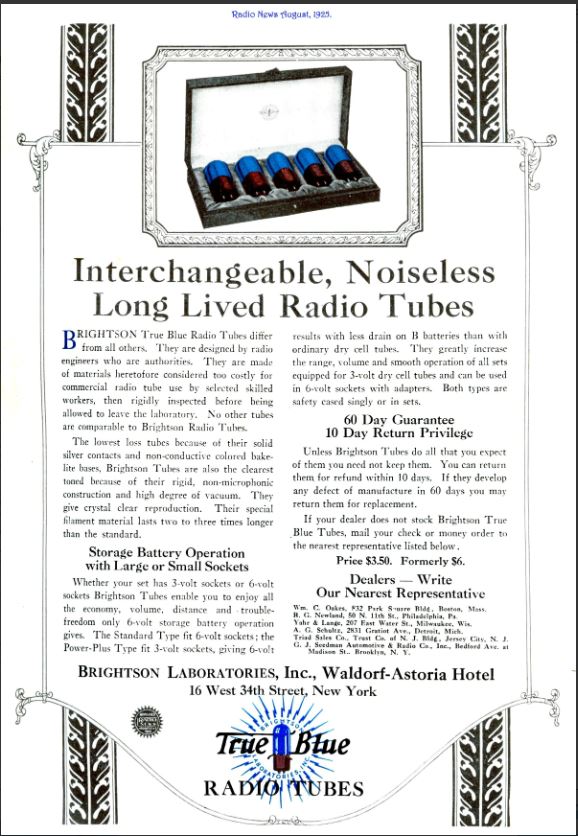
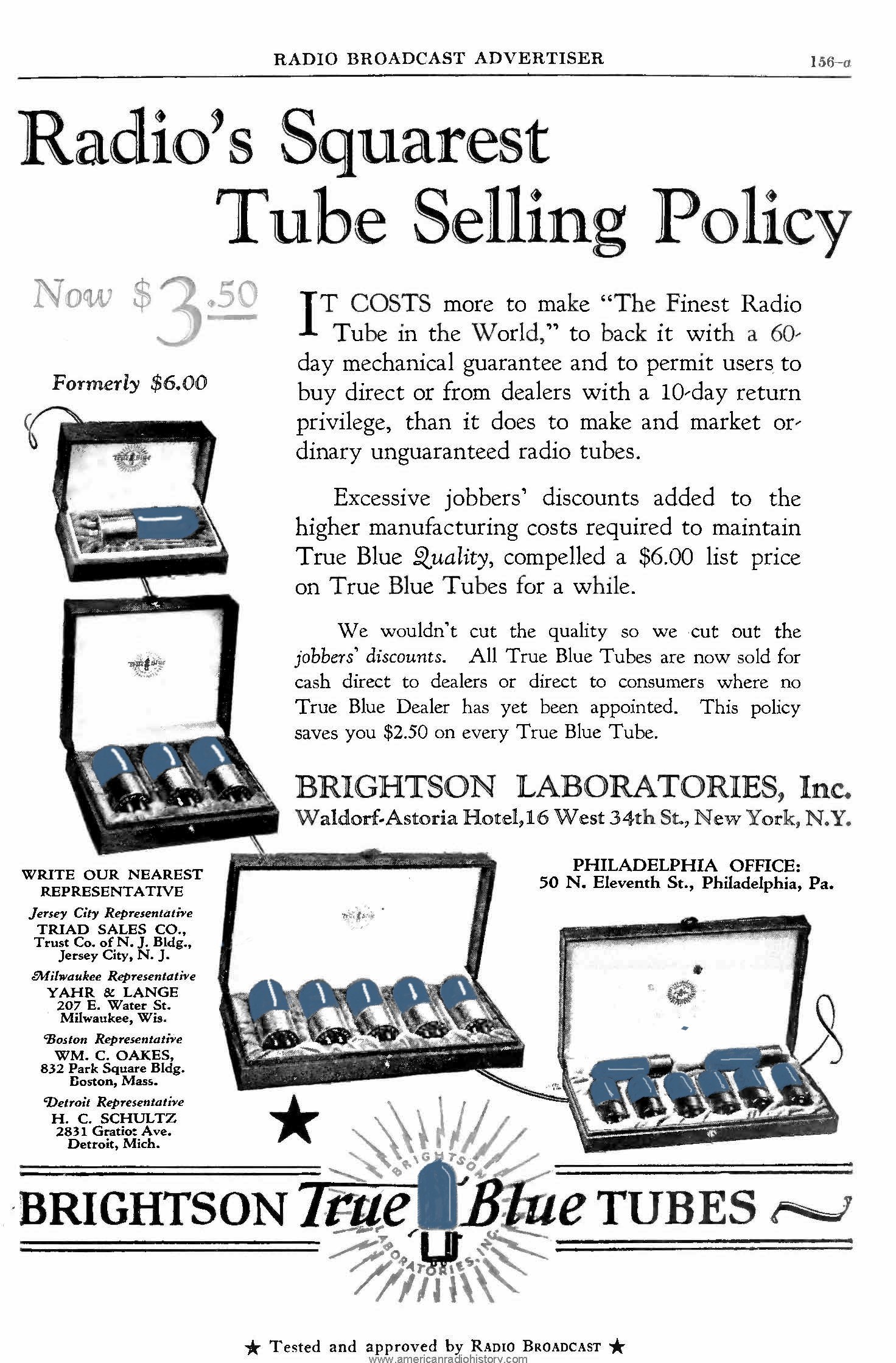
Fig. 5 above seems to be some sort of announcement to a trade publication the name and logo of the new Brightson Laboratories Inc. company.
Fig. 6 is the only ad for the Brightson Labs stating a $6.00 price.
Fig. 7 is the first early ad I found with an initial look at the five- tube set.
Figs. 8 &9 are rare colored ad’s that were found for the True Blue’s.
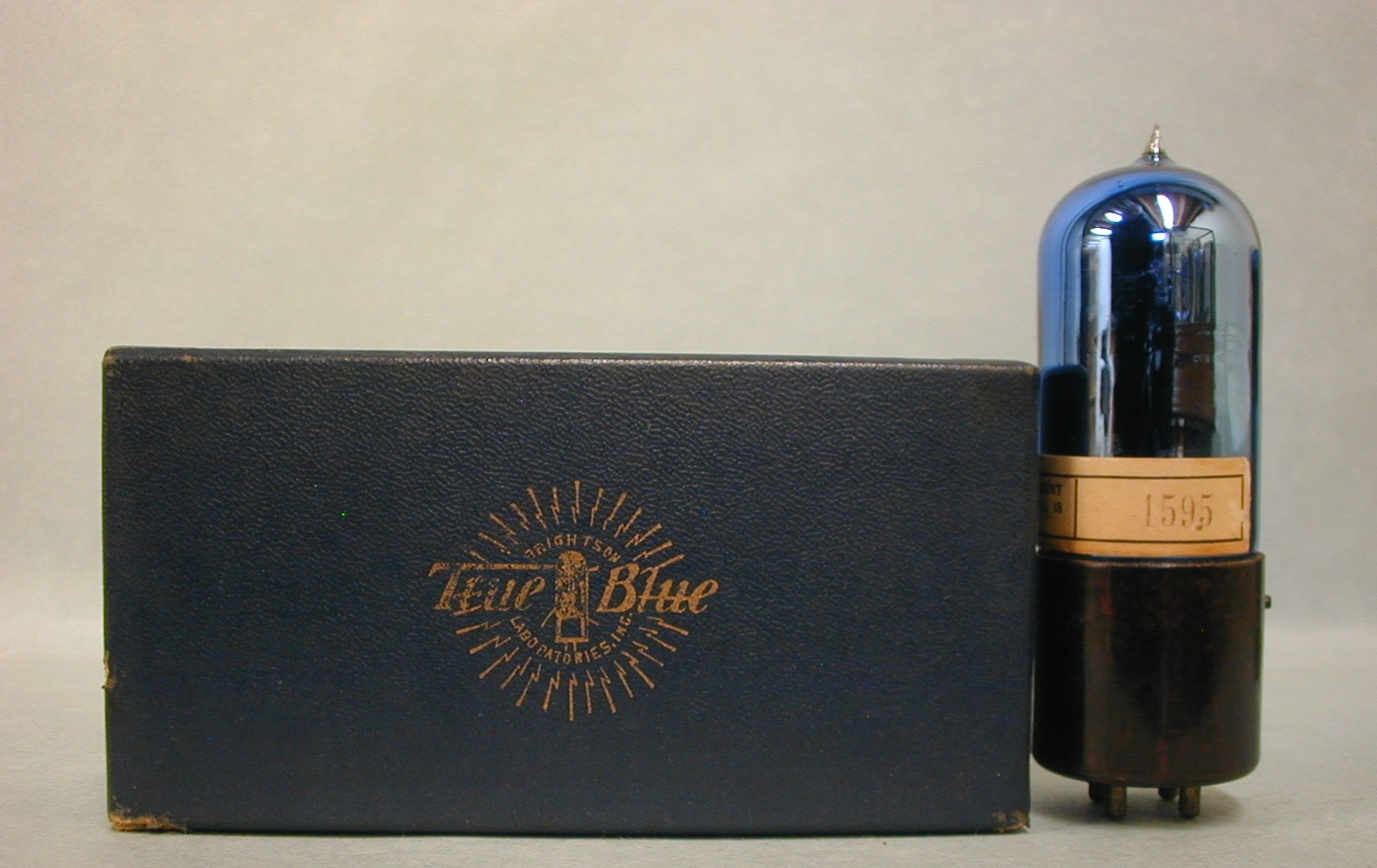
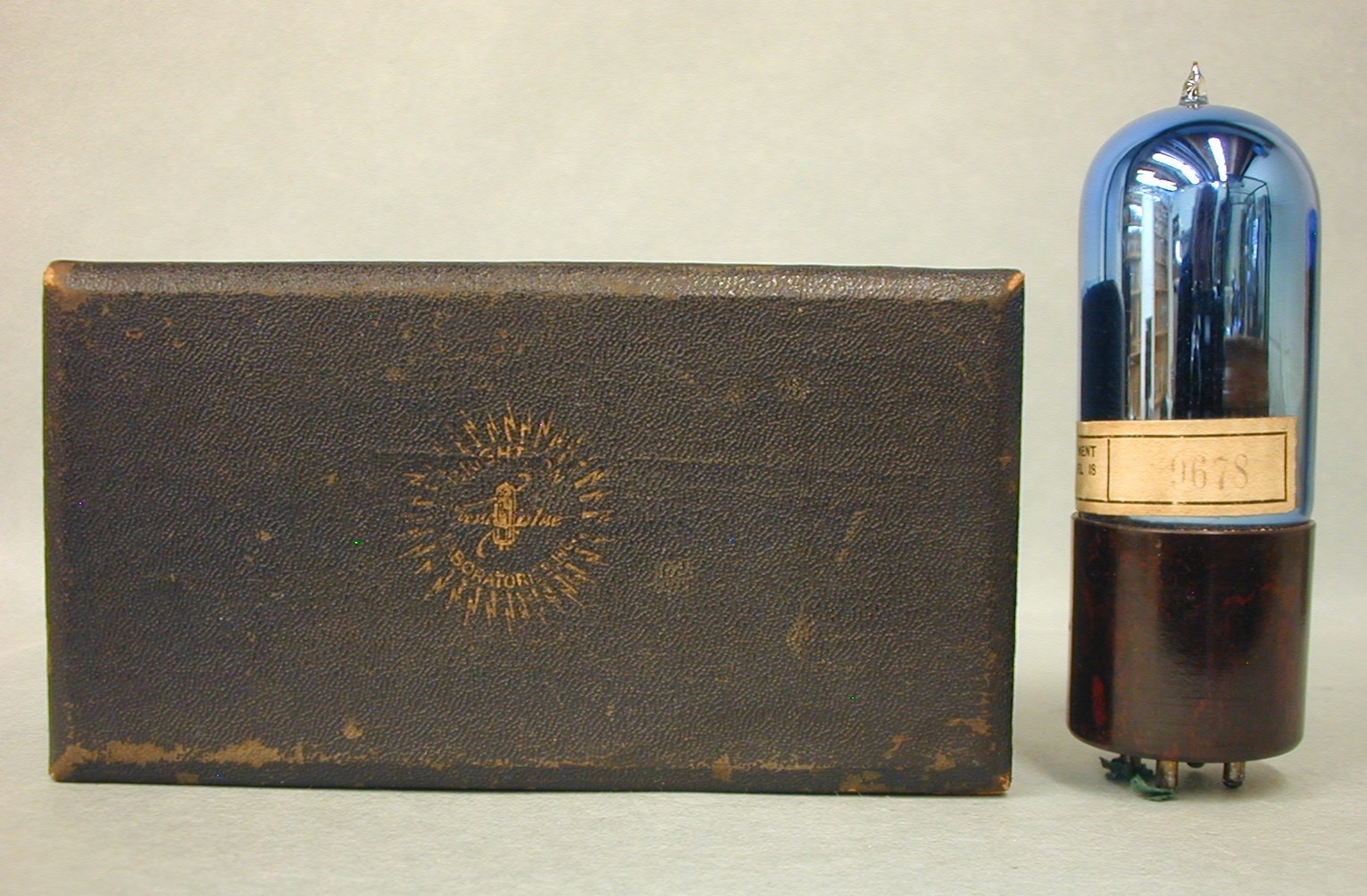
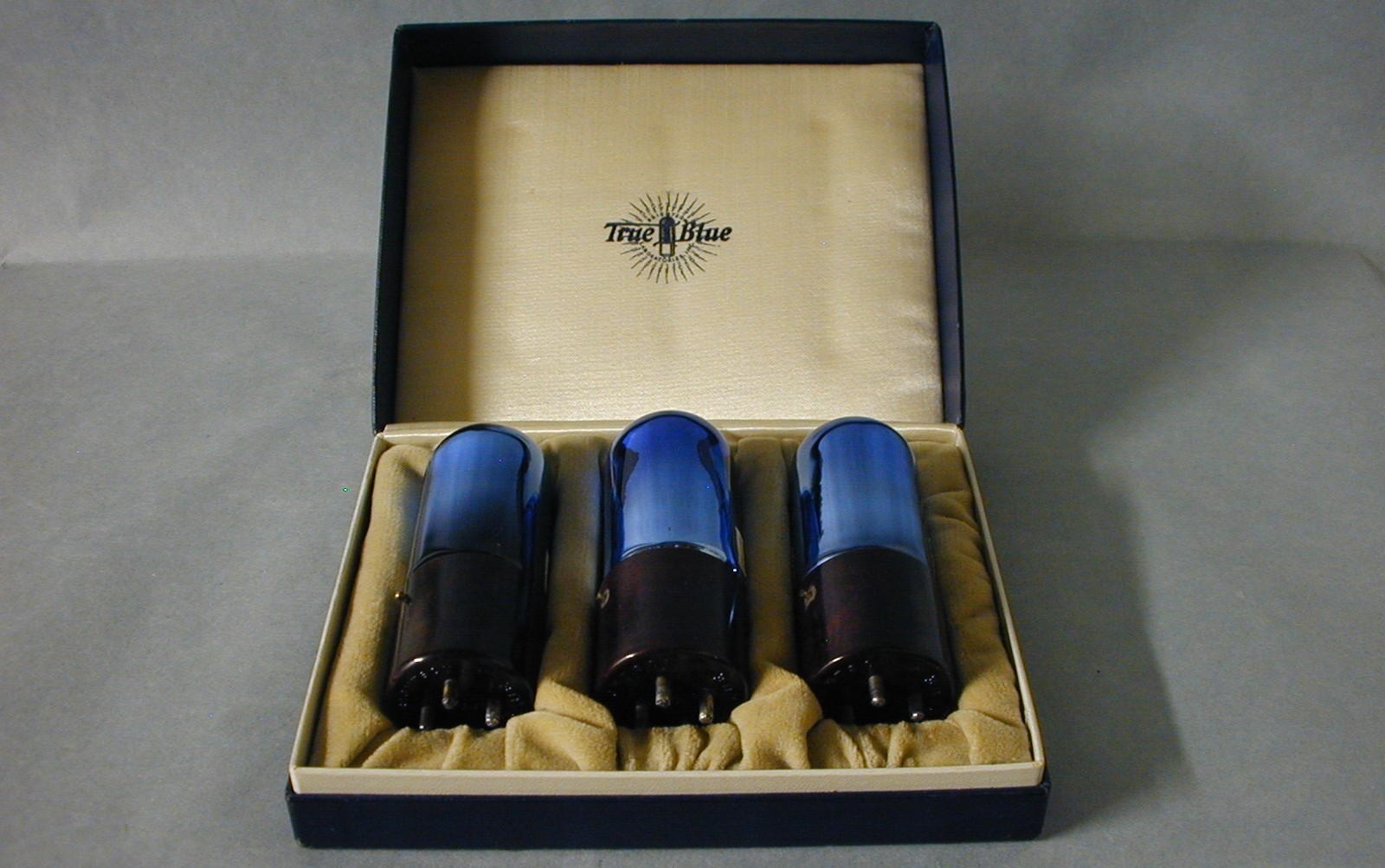
Fig. 10 is to my knowledge the earliest 1 tube box. It is smaller than the later boxes by around 3/4″ of an in height but much the same otherwise. The picture gives some indication of the difference in size. The small production number on the paper label of 1595 on the tube is in line with the early box style?
Fig. 11 It seems to be the more used size with the top lid having an angled top edge and is generally a slightly larger box. The larger production of 9678 on the paper label on the tube indicates my theory may be correct.
Fig. 12 is the 3- tube version with 91576, 7, and 8 numbers on the tube paper tags.
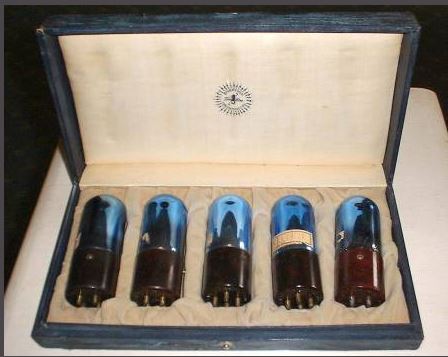
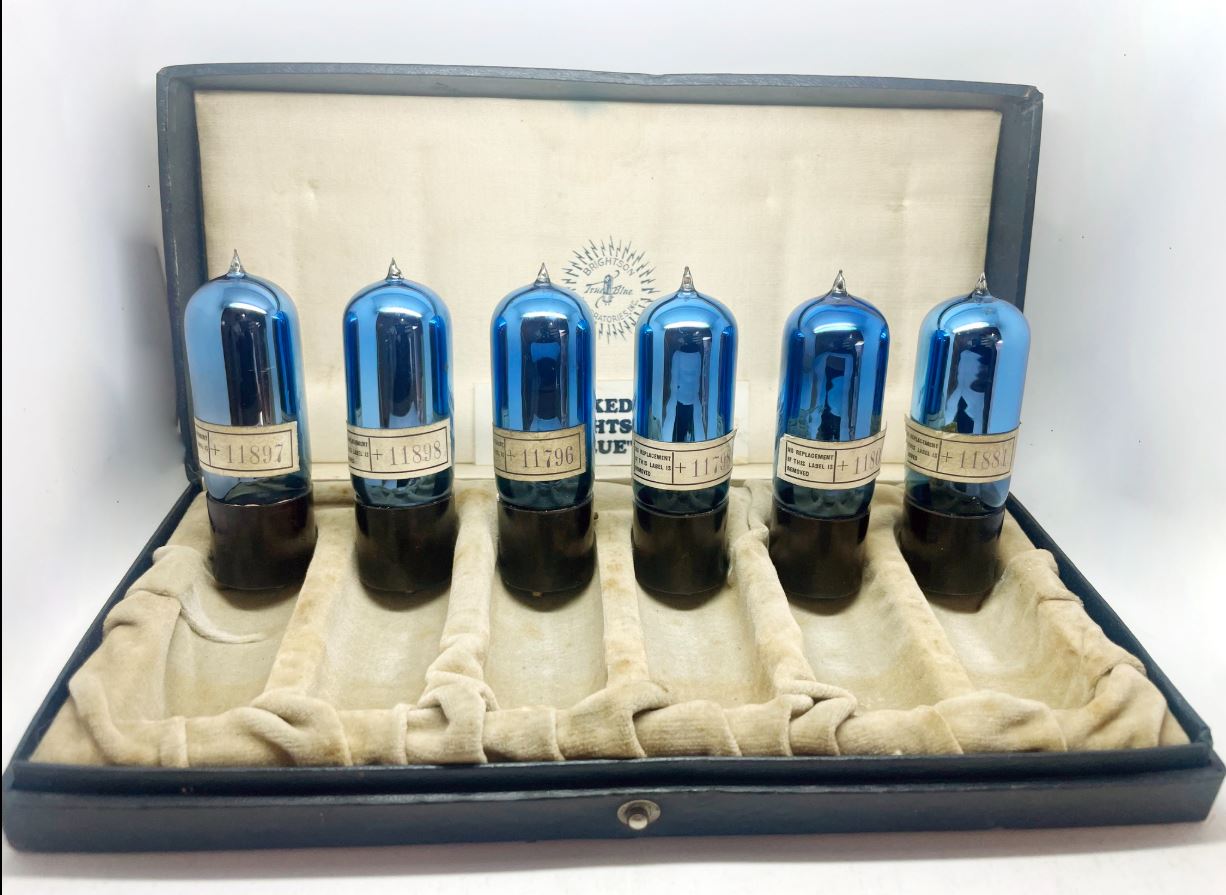
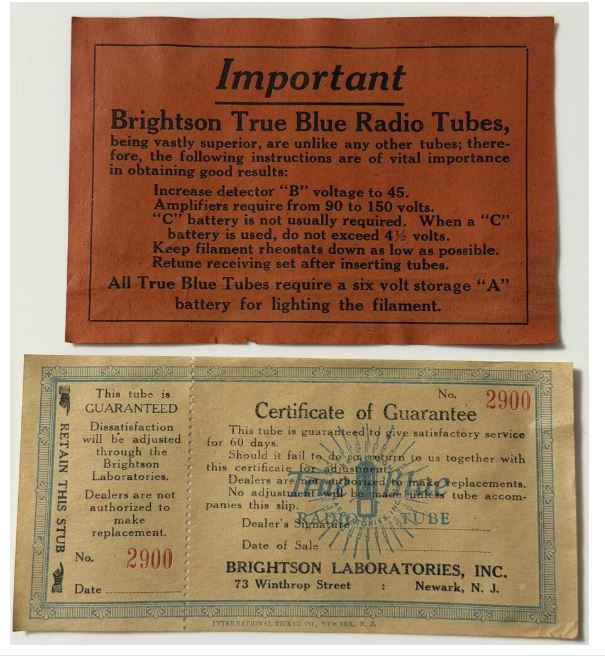
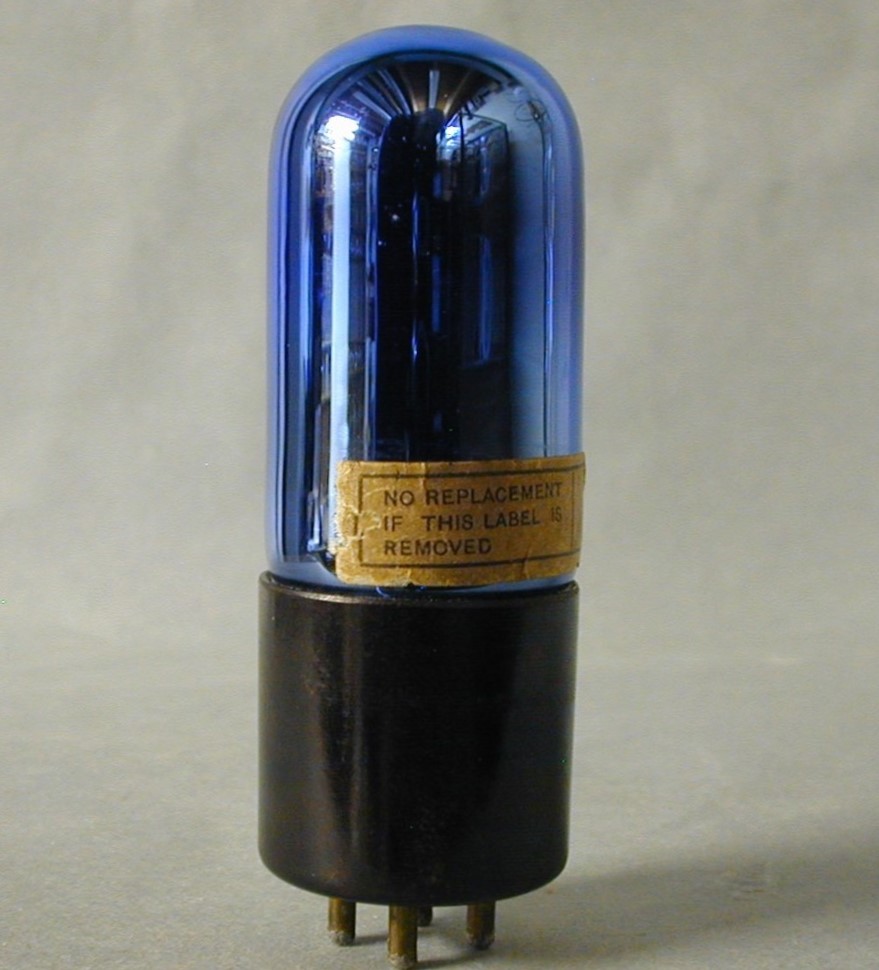
Fig. 13 has the 5- tube set in view. Random picture.
Fig. 14 shows the 6- tube set of tubes. Random picture.
Fig. 15 are the types of paperwork. The lower certificate has included the number of the first of the paper tag number on the tube in the upper right corner. No collector picture of an 8- tube set could be found but the ad in fig. 9 seems to say this set was available. 199 type tubes seem to have been also offered in the same box and with the same number of tubes.
Fig. 16 is a machine made un-tipped version of the True Blue. This is only one I have ever seen but the number on the paper tag is not readable so what could be assumed as a very high production number cannot be verified.
Sources: Various.
Leave a Reply