
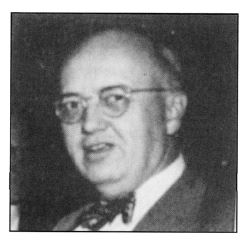
Gerald Tyne gave an AWA conference presentation on October 9th, 1965 in Mason, Ohio, called “Rare Tubes: How to Recognize Them, and Why They are Rare” at what is now called “The Voice of America Museum” now located in West Chester, Ohio.. In 1993, in the AWA Review Vol. 8, Jerry Vanicek and Ludwell Sibley teamed up to re-visit the original manuscript from Bruce Kelley and present much of this most fascinating article. I will attempt to concentrate on the LRS relay, or Von Lieben tube, portion of the article. I can only assume that Bruce acquired a copy of the manuscript from Tyne and included it in the AWA library. I also assume Jerry Vanicek had the original from Tyne and was in his paper collection. The original text and pictures Jerry had are not available. At this point in writing this article, I was and am on my own to find any further information to complete my article in respect to finding the original complete text and pictures in the US Naval Archives of the LRS German equipment on the S. S Vaterland. What is the S. S. Vaterland?
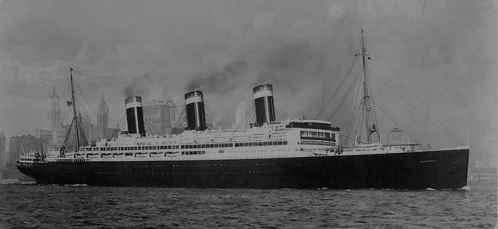
The S. S. Vaterland was built by the German company Blohm- Voss shipyard in Hamburg. It was completed in April, 1913. At the time, it was the largest and quite opulent passenger ship ever built. In early 1914 it traveled to New York and docked in the harbor there. While there, war was declared between England and its allies and Germany. The US Navy seized the Vaterland and kept its crew onboard until April 6th, 1917 when the US entered WW1. It was found that during those years the crew did much damage to certain parts of the ship. The crew was let go on that very same day and sent back to Germany. One of the only intact areas was the radio room containing the transmitting and receiviing radio equipment along with 14 Von Lieben vacuum tubes. Expert US Navy radio and tube men removed all that material, formally called the US Naval Radio Telegraphic Laboratory. Not having, a physical space to call their own, they borrowed a small portion of the US Naval Bureau of Steam Engineering itself in its infancy. There they analyzed all the equipment and wrote a report with the numbers and letters called Ry 42A 106 and submitted to the Navy on May 10, 1918. This report , I am sure, contained a great deal of text and many more pictures that are in this article originally by Tyne and Later Jerry Vanicek and Ludwell Sibley. What I tried to do was find and include in this article the complete Navy report. Little did I realize that the size and difficulty of finding them in Naval archives considering they started at the time of the revolutionary war. I spent 4 months to narrow down where this particular report may lie that turned out to both fruitless and disturbing. Why? Our current President has reduced the number of people to 6 people in the entire archive department in the largest building the government owns in Washington DC., not including maintance personnel. They suggested I travel to that building but that they could only point me to a possible direction where the files I am looking for may be. Assuming I could find them, I would need to bring my own scanner to copy them. Small chance of finding them with literally millions of reports to look through. Furthermore, the 6 remaining Navy people still there are charged with, again by our current President, to remove from all files and reports any mention of minority servicemen or officers that had any sort of notoriety of good deeds. In other words, history is being re-written as we speak.
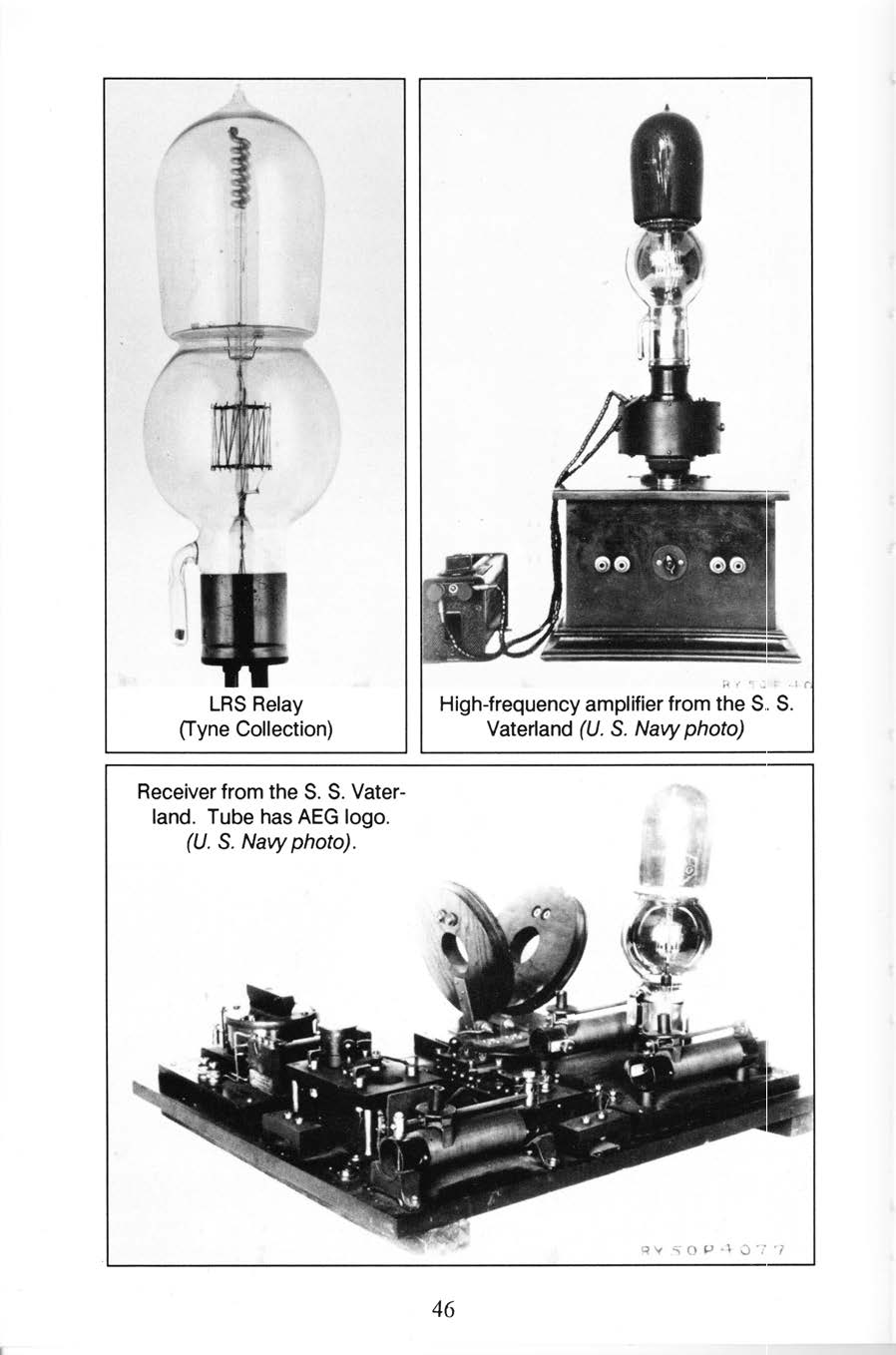
The top left photo in fig. 1 is the LRS relay tube that was in the Vanicek collection The other two are US Navy photos that are in the report of 1918.
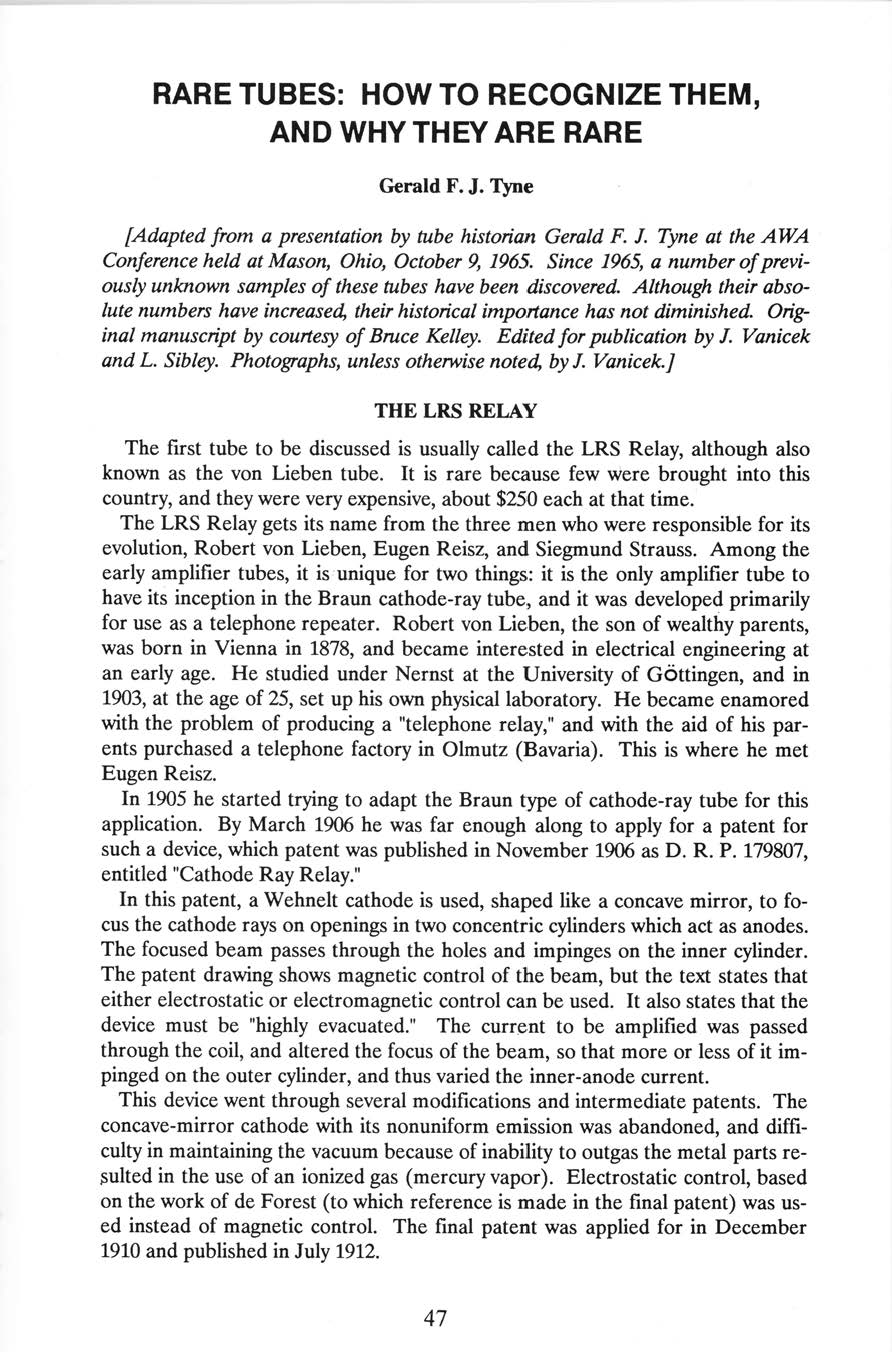
Fig. 2 is the beginning of the Vanicek and Sibley article.
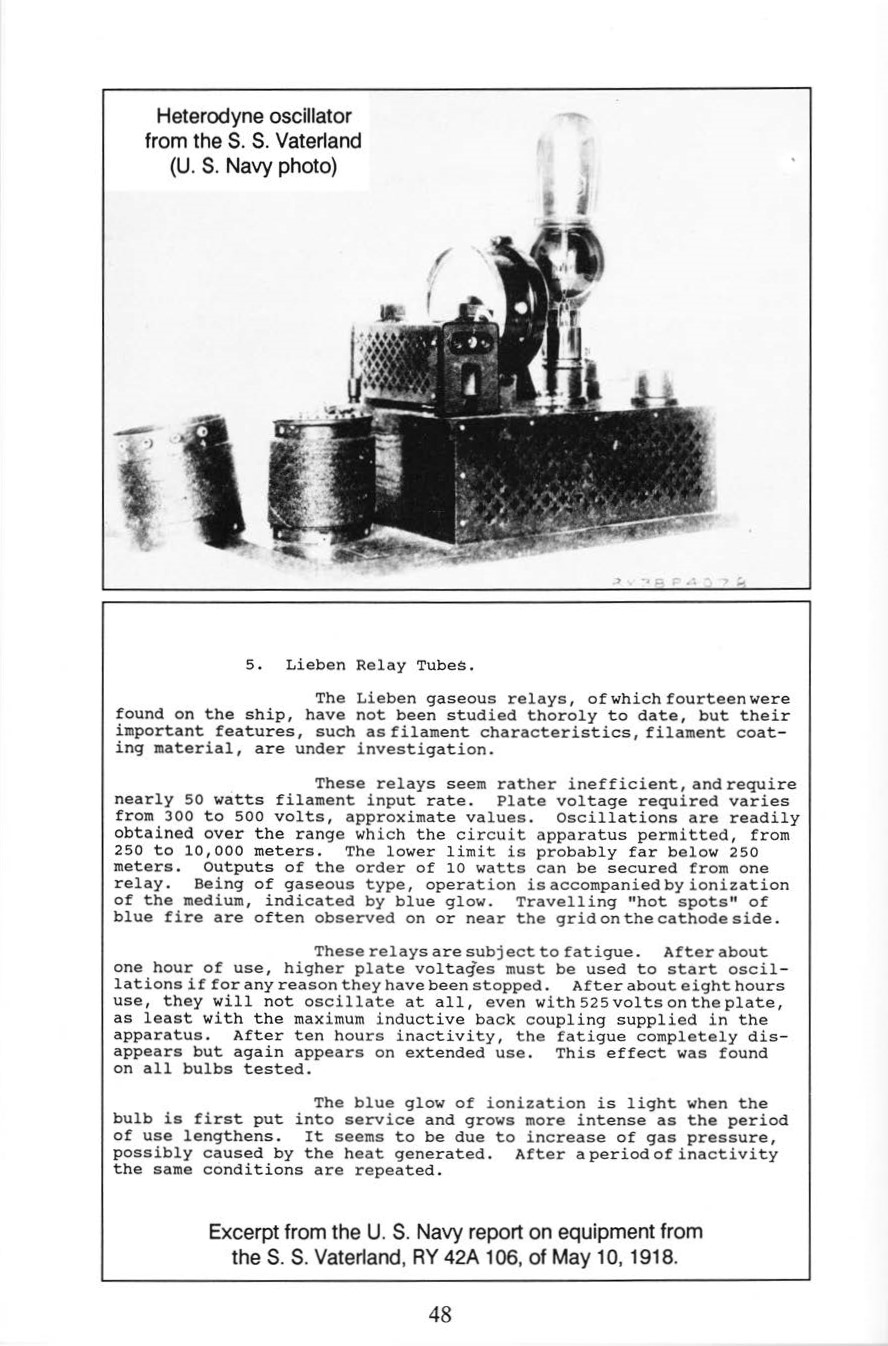
Fig. 3 shows a US Navy photo of the heterodyne oscillator from the S. S Vaterland with an explanation below the picture from the 1918 report. Notice within the explanation is a number 5. This tells me that without the entire Naval report, no one will ever see the complete report.
Fig. 4. The Vanicek/Sibley takes up 2/3 thirds of the next page where it ends.
Fig. 5 is a 1914 photo of the S. S Vaterland probably shortly after leaving Hamburg for a shakedown.
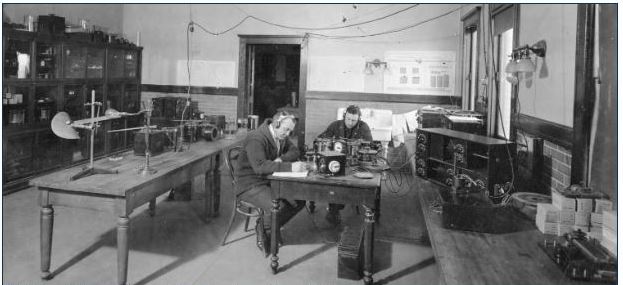
Fig. 6. This is a 1916 photo of the shared space the US Naval Telegraphic Laboratory had from what I assume was their small table and all space to the right in the photo. About a year later the photos and report were made here about the equipment and photos on the S. S. Vaterland.
What happened to the Vaterland? Because of the extensive damage the German crew did, the US Navy spent 3/4 of a million dollars to make it seaworthy. It was then used to transport thousands of US military to France. WW1 ended so quickly it was then used to bring thousands back home. It could be asked why would they put so many people on one ship in case of U-Boat attack. The Vaterland could get to a confirmed 27 knots and because of this speed, attack from U-boats was impossible. It was also well protected with many Navy support ships for those crossings. The Vaterland was not the only ship seized by the US. many were acquired and used for the same purpose. As a side note, the famous actor Humphrey Bogart joined the US Navy in 1917 and served on the Vaterland renamed the Leviathan by the Navy.
I was, however, able to download a 1922 US Navel report “History of the Bureau of Engineering Navy Department during WW1” It does mention the Vaterland and the many other ships converted and used. It is 5 years too late for the report I am looking for to complete this article. It can be found here: https://www.history.navy.mil/research/library/online-reading-room/title-list-alphabetically/h/history-bureau-engineering-during-wwi.html Select .PDF above the report picture. By the time this 1922 report was created, the US Navy Telegraphic Laboratory along with the Bureau of Steam Engineering were eliminated and a new branch was made. Franklin D. Rosevelt, Assistant Secretary of the Navy, was responsible for many very much needed changes in the Navy.
I also wrote a just updated an article called “Robert Von Lieben and the LRS Relay” Find it here: https://vacuumtubearchive.com/lieben-lrs-relay-2/
If enough readers respond to this article and request it, I will complete this Vanicek/Sibley article with many other rare tubes and how to recognize them.
Sources:
AWA Review Vol. 8, 1993 and their kind permission to use their article.
Leave a Reply